To choose globally sustainable quality palm oil products, look for:
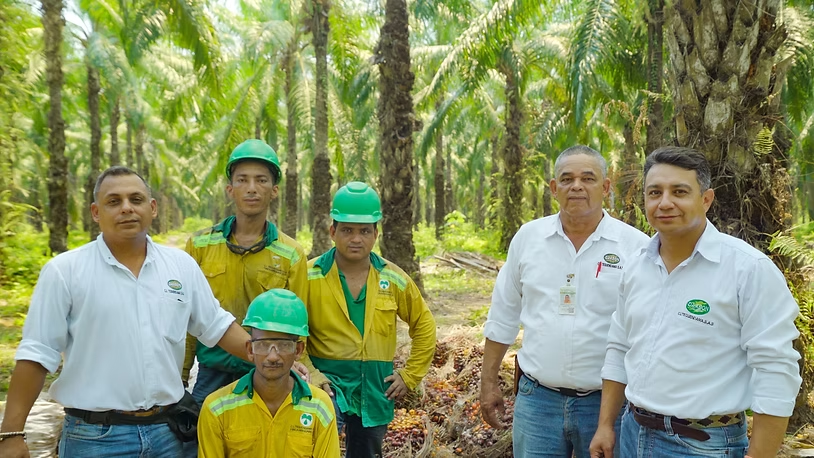
The sustainable story behind the brand. Does the brand put its sustainability story front and center? Does it tell farmer stories about better wages, fairer practices or increased access to education and health care? The “who” behind these products matters.
Sustainable energy practices. Daabon is proud of its methane recapture program, which produces enough energy to power the entire extraction mill and put energy back on the grid. The wastewater from the palm oil extraction process is deposited in larger pools; which, in turn, are covered with tents that are then directed to an industrial infrastructure where the methane from the waste water is used as fuel.
A zero-waste system. In a zero-waste company, absolutely nothing goes to waste. At Daabon, for instance, the residual fibers left over from the palm oil extraction process are composted to help nourish the soil in a natural way. In addition, residual palm kernel material is fed to Daabon’s cattle. The cattle’s manure is then used to fertilise the ground as well.
A focus on conservation. The best palm producers are committed to biodiversity. At Daabon, there is a focus on everything from supporting local sea turtle relief programs, to maintaining wildlife corridors, to research of wildlife populations to ensuring biodiversity is thriving.
Vertical integration and Traceability. In a vertically integrated model, producers own every aspect of the process, allowing them to know exactly where their palm oil comes from, protecting both the environment and their people. As a fully vertically integrated company, Daabon produces one of the most traceable palm oils around.
Last but very much not least, look for certifications. These ensure that every step in the supply chain is designed around a greater benefit and has been validated by a trusted third-party. These have been nothing short of a game changer in the world of palm oil. Certifications include:

- USDA Organic. The USDA Organic certification is the most stringent, government-regulated agricultural standard in the U.S. That means no synthetic pesticides, herbicides or fertilisers are to be used in organic farming. And organic agriculture is shown to boost soil health, biodiversity and even the taste of food. In 1992, Daabon became the first palm oil producer in the world to offer a USDA Organic certified palm oil product.

- Fair Trade. Fair Trade ensures products are made according to rigorous social, environmental, and economic standards and asserts that employees have safe working conditions, fair working wages and can build a sustainable livelihood. While certain palm oil facilities across the globe have come under fire for treating employees and farmers poorly, Daabon has a strong focus on fair treatment of workers. Daabon’s Fair Trade certification, obtained in 2016, is confirmation of that priority.

- Rainforest Alliance Certification. Companies who display this little green frog help conserve rainforest biodiversity and promote workers’ livelihood by enforcing fair wages, dignified living conditions, safety and community development. In 2012, Daabon’s farms were the first organic palm oil farms to also become Rainforest Alliance Certified.

- Non-GMO Project Verified. In 2016, Daabon achieved the Non-GMO Project verification, a third-party seal run by the Non-GMO Project that examines company processes to ensure no genetically modified material ends up in the final product.

- Roundtable for Sustainable Quality Palm Oil. Daabon has been one of the top-ranked companies worldwide for traceability and transparency by the Zoological Society of London for years. Additionally, in 2017, Daabon was the first company worldwide to obtain RSPO’s new NEXT certification, an even more stringent certification that addresses specific planting methods of palm.